On Personal Religion
A too brief articulation of my faith

We are born into a world in the middle of time. We do not get to start from the beginning. We arrive into a common history and with it an accumulation of wisdom and habit which form the grounds of our perceptions. It is easiest to accept them, impossible to ignore them. We happen now to be in an age with some choice as to how to know, and what to do with it.
The choice of how to live brings to mind how others, past and present, have lived and what they have considered most important. Any decent survey in this area will bring up the question of God. How exactly to ask the question of God is hard to say, but the word is used by many in their answers.
God, possibly, created Heaven and Earth, loves us, is Jesus, is the metaphysical source of morality and truth, favors Republican social, fiscal, and foreign policy, is vengeful, is love, spoke literally in the Bible, punishes certain transgressions with sickness and natural disasters, hands out sports victories to sufficiently prayerful college athletes, motivates heroically selfless care for the vulnerable, and promises eternal life, according to various sources.
It can be hard to deal with such an amalgam, so some prefer to treat them all as unproven rumors, and see whether this being is needed for reality. People before us mostly believed in God, and most of our received knowledge assumes him, but our received knowledge of science and the stars has turned out to be in some ways mistaken so perhaps God is the same. If we can construct a picture of the universe with all the important parts that doesn’t involve God, we won’t need him.
So in that way thinkers have busied themselves over the last few centuries. Perhaps morality can be justified through pure reason or evolutionary arguments or some simple natural property. Perhaps the universe can be explained not through creation ex nihilo, but a Big Bang which happened for some mysterious reason. Perhaps human consciousness actually has no purpose and is just an illusion caused by random accidents of coincident atoms. That we can know these deep truths of the universe with our brains is a happy chance of how logic shapes information structures in the random froth that is biological life. These are all possible, all at least a little bit unsatisfying.
But when I am faced with this project, I imagine whether satisfying logic or argument would answer me. If the universe just exists, no particular beginning or purpose to which it is ending, if humans are random combinations of atoms with morals shaped by the entropy of a void, there is supposed to be some existential solace in having full ownership of ourselves. We would know with certainty that these larger questions are just superstitious distractions and we ought to be dealing with the immediacy of our lives and those around us. Epicurus and John Lennon urge the pursuit of present happiness and peace. This certainty, with God or without, has been the goal of most philosophy, and most have claimed to arrive at it, most recently by taking God out. But I find it hollow.
In the world I have found myself in, I have been told much and confirmed some of it for myself. I know that I believe in morality, I know that I have deep relationships with those around me. I know that I have discovered again and again that it is hard to exactly justify this belief, that nihilism or egoism make plenty of logical sense, and also that I don’t need a foundational belief in the categorical imperative or in God to continue searching for the right thing. I know that people are important, that my consciousness and experience are important even if some say they are illusions. I know that I sense that morality and consciousness are tied in some way to purpose, the purpose of people and perhaps the purpose of the whole world, even if I have failed to even properly say what I mean by that. I know that these are not syllogisms or strictly logical connections, but I have learned that one needs more than certainty to live.
I think existence, creation, may have a purpose, that love and beauty are very important, that evil is real but might be triumphed over, and that it is good to do what is good, and that all of these are tied to something called God. Vague, poorly formulated, arguably nonsensical, but these are enough to make me a theist. Most who have shared my senses have called what unites them God and disagreed violently over what exactly that means. I join them in disagreeing, and in seeking this shared truth. If belief in God is belief in a specific being who did some important early work of making people and will punish them at some later time, I do not believe in that, but I now see this as simply rejecting a view of God rather than God himself. It is only fully leaving the conversation, taking all these questions as settled in our little decaying human void that would count as atheism for me. Theism is continuing to ask these questions, and to seek earnestly and imperfectly their answers.
The traditional theist answers to my original questions of morality and purpose and creation and consciousness are actually not much better, they have the same unsatisfying gaps as the materialist hand-waving. But there is an invitation to keep investigating in the hopes that something more than human lies at the end.
Many atheists explain their disbelief not in skepticism, but contradiction. Perhaps the most common objection in post-Enlightenment secularity is the Problem of Evil. How can we believe in a omnipotent omniscient God who allows such terrible unjustified suffering. I have not resolved this question. But if we treat it as a contradiction, that therefore God does not exist and only suffering does, we have just treated the question as unanswerable. We get certainty of the void and nothing else. This hardly resolves suffering, only kills one hope that it might be overcome. Redeeming suffering is to me a worthy fight. Augustine and Leibniz fail to resolve it with their too clever explanations, but perhaps omnipotent and omniscient aren’t so important. The real God may be Buddha who has a path outside the suffering that makes up existence. Even the pain of innocents could be necessary for a greater redemption, and that might prove that existence is fundamentally broken. I do not expect to find the answer in my mortal allotment, but I do have a hope that it is not fatal, and a belief that thinking about suffering and its contradictions is a part of engaging with reality.
But God is not just a question of being or believing. All those who spoke of God also made clear that he wants you to act, and how that is changes widely with who you think he is. I disagree with some of my fellow followers that one needs a transcendental origin of morality, most people do good without having any such theory, but the practice invites pursuit of this area. One can make a totally personal view of God, but I have become convinced with experience that there is value to not attempting to do everything oneself. Traditions have many flaws, but they contain so much that one learns much more from studying them than attempting their reinvention.
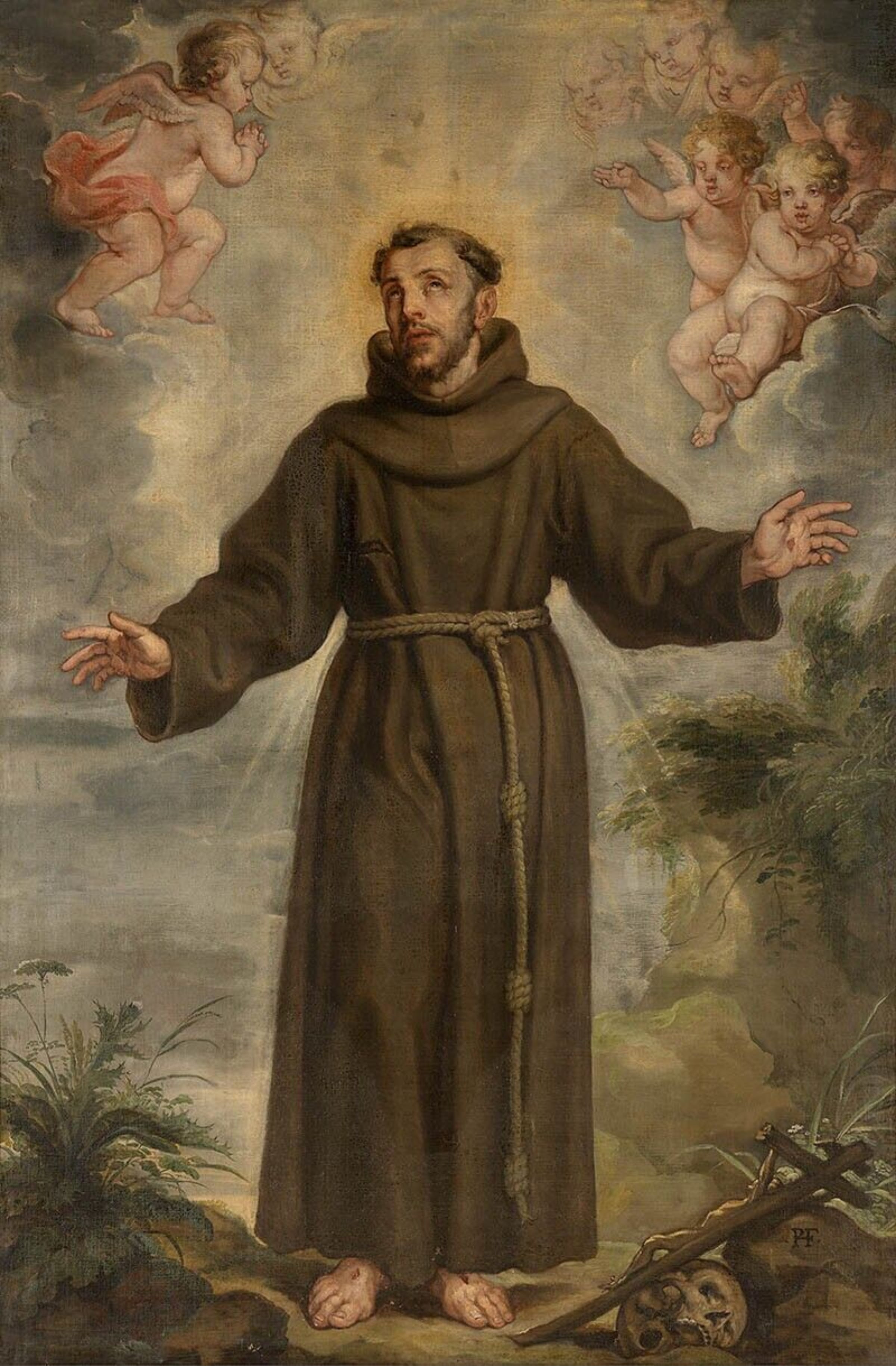
I have studied many views of God. Christianity, Islam, Hinduism, Buddhism, Zoroastrianism, little known cults and new agisms, philosophical abstractions and empty tautologies. None get it right. But some are more right than others. In particular, some make specific claims about God’s presence in the world and his actions, and can be judged based on their coherence, and in their history.
Buddhism, to give the example I studied most carefully in the early phases of my search, contains multitudes. The first form I came across was a secular morality with some good ideas on the nature of the mind which derived its authority either from science or from the ancient meditation tradition of the Buddha or from some combination of the two. Looking into its history, I discovered the secularism to be unsatisfying with its suspension of the most important questions, dissolving meaning into therapeutic pleasure, and the more ancient form to be deeply involved in a cosmology of countless rebirths which I have found to be false. The four noble truths are not true in the way they were meant in a world without rebirth, even if some metaphorical reinterpretation of desire leads to suffering is a piece of timeless wisdom.
I then encountered Mahayana Buddhism with its infinites and the pursuit of saving all beings. I found that the Mahayana was often insistent on its authority coming from the Buddha through secret transmission. And as a strong believer in modern historiographical criticism, I found this reliance on authority through dubious history to be a discredit. Buddhism has captured parts of God that no one else has. But it is not true.
Much the same with the others, but on Christianity I came to pause. Christianity claims that God is in fact Yahweh, the God of Israel, that he was incarnated as a 1st century Palestinian Jew, that this man, God, was crucified and rose from the dead, fulfilling various Jewish prophecy, and that this was the most important event in this history we have found ourselves in. Most of this cannot really be investigated, but I wanted to know whether this man was God and whether he rose from the dead.
Jesus’s resurrection must be graded against many other bizarre claims of magic throughout the centuries. Chinese immortals have been seen in the mountains, Mohammed traveled to heaven in the night journey, people have seem many improbable things which contradict the potential reality of the others. But in these other ones I have investigated, I find them more doubtful, more poorly sourced. 1st century Jews expected a Messiah who was to be a military conqueror, Jesus rode into Jerusalem on a donkey and was murdered by the state as a criminal. His disciples fled. And in the days that followed, according to our scattered and non-contemporaneous sources, they all came to believe that he had returned, not just as a spirit or moral presence, but as a singular resurrected body which was not really part of the prior Jewish tradition. They may have been lying for their own profit, but all of them willingly accepted death over renouncing whatever changed their lives in those days. Based on the evidence we have, I believe that the disciples believed in what they experienced, that they felt they had come to know God and the purpose of existence, that they conveyed this to their followers who wrote it down in the context of the living community of the 1st century church. And that this church was not able to keep together as a community or a coherent body of knowledge of what this all meant, which only came with the politics of consolidation in later century.
I believe that this makes me a Christian. I think God was there, and I think this is the best path to knowing him I have discovered.
I appreciate tradition and do not think agreement of belief is the most important quality of a community of moral practice. With my family, friends, community, and country, I share many disagreements and gain much from shared order, purpose, and wisdom. My beliefs would make me a Christian isolate, but my reading of what Jesus conveyed to his followers is that he wanted them to be in communities, and following this wisdom I have sought to choose a place to belong and to help. Study of the Church’s history of fracture reveals much of the choice to be political. The Catholic Church took its organization and dominance from the politics of late Roman antiquity and its legacy in Western Europe, the schisms - Donatists, Arians, Nestorians - seem to have separated more based on geography and factional allegiance than crucial questions as for how to live. I appreciate the seriousness of the early church fathers, but I disagree that Christology is a reason for dividing God’s people.
I pray for unity, but I must still choose a faction in the politics of Christianity as it is today. Protestantism has lost sight of what it is protesting, Luther was a good reader of the bible, but an outdated one. The rebellion against Church hierarchy, correct at the time, has produced a endless line of schisms further and further from the united confusion of the disciples instead of reforming the universal church. Orthodoxy has my theological sympathies, for it is correct that the Bishop of Rome was only prima inter pares, that the Holy Spirit should not be denigrated by the innovative filioque, and that Augustine perhaps took a wrong turn with his emphasis on sin and grace over the mystical deification of man. But as Catholicism is rooted in the politics of Western Rome, Orthodoxy has now become rooted in Eastern Rome and its autocephalous allies, which in these late times has turned to bitter and suspicious ethnonationalisms which reject the outsider both Samaritan and Jew. Catholicism with all its immense flaws is my choice, because it is a home in which to disagree and grow towards the unity which Jesus wanted for his people. That it is the church I was born and baptized in, and the the church of my family, is not sufficient, but lives are lived based on duties and relationships and histories just as much as they are on thoughtful decisions. Catholicism is my home and I pray that Catholicism is a home in which to build the universal church.
So in that order I am a Theist, a Christian, and a Catholic.
The matter with reincarnation, for me, is simple:
* Those how have had multiple lives and guard perceptions about it, or even recover memories of those past lives, are drawn to religions and/or philosophies that talk about having multiple lives. These religions are, in this specific aspect, self-evidently true for them, as it matches their experience.
* Those who are in their first life, or who had too few lives for any perception of continuity to develop, are drawn to religions and/or philosophies that talk about having a single life. These religions are, in this specific aspect, self-evidently true for them, as it matches their experience.
If this is so, it leads to two observable outcomes:
* In times when the human population is growing significantly, single-life religions and philosophies grow much faster than multiple-lives ones. Lots of new spirits being born, all in their first life, hence without past-life experiences, so without any perceptual alignment with multiple-lives perspectives other than, at best, "it's an interesting idea that feels speculative at best". The ratio first-livers vs multiple-livers pends to the first, and so religious alignment.
* In times when the human population remains mostly stable, or reducing in size, multiple-lives religions get ahead, as there are more multiple-livers returning compared to first-livers. The reverse trend then follows.
If the above is accurate, the current trend of single-life religions being majoritarian will reverse after the human population stabilizes, starts decreasing, and new generations are born in that context.
Myself, I have memories of past lives, so single-life religions provide no appeal to me. I find them interesting, and from among them I enjoy studying Catholic philosophy as one of the best developed ontological models for a single-life reality. I know from direct experience it to be false, but that it's extremely interesting an intellectually engaging, it is.